









Explore Careers
Photographers and Videographers
Explore Careers
Photographers and Videographers
Arts, Audio/Video Technology & CommunicationsService Branches with this Role



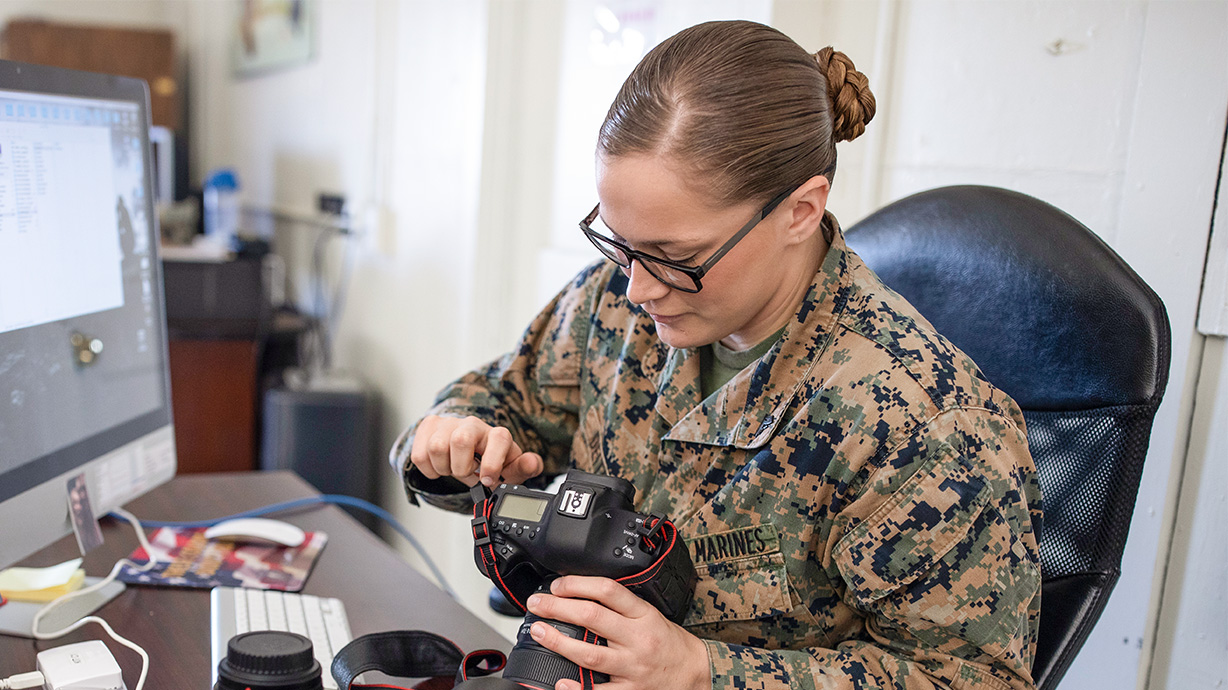
What do Photographers and Videographers do in the Military?
Where do Photographers and Videographers work?
Photographers and videographers work both indoors and outdoors while photographing their subjects. They may take photos from aircraft or ships. They process photographs in photographic laboratories on bases or aboard ships.
How much do they make?
Median Military Salary
This is the median, or the midpoint, of the salary range for this career.
Note that the median salary does not include bonuses, special pays, health or dental benefits — which are a standard part of military compensation.
This is the median, or the midpoint, of the salary range for this career.
Note that the median salary does not include bonuses, special pays, health or dental benefits — which are a standard part of military compensation.
$110,681
Military Salary Range
This is the range based on years of service, degree level, special pays, family status and location.
Note that the median salary does not include bonuses, special pays, health or dental benefits — which are a standard part of military compensation.
This is the range based on years of service, degree level, special pays, family status and location.
Note that the median salary does not include bonuses, special pays, health or dental benefits — which are a standard part of military compensation.
$26,007 - $356,274
How Military Pay is More Than Just a Salary
Base pay is the standard income you'll earn as a service member, providing a stable foundation to start achieving your financial goals.
- Set based on rank and years of service.
- Paid every month.
Allowances are additional payments to help cover living expenses like housing and food.
- Tax-free payments.
- Varies by location and family status.
Special pay provides extra compensation for unique skills, hazardous duties, or challenging assignments.
- Based on specialized roles.
- Varies by position and duty.
What training do Photographers and Videographers gain in the Military?
All enlisted service members complete basic military training, which includes time spent in a classroom and in the field, and covers tactical and survival skills, physical training, military life and customs, and weapons training. Photographers and videographers in the Military will gain skills through classroom study, including practice in taking and developing photographs, and on-the-job experience. Job-specific training content may include:
- Photographic processing and reproduction
- Principles of photojournalism
- Operation and maintenance of photographic equipment
- Motion picture equipment operation
- Audio recording and using sound equipment
- Scripting and special effects techniques
Military Training for Officers
Officers typically enter the Military after they have completed a four-year college degree. All officers complete a comprehensive training program covering responsibilities, military structure and etiquette, traditions, and leadership development.

What skills help Photographers and Videographers succeed?
- Ability to recognize and arrange interesting photo subjects
- Accuracy and attention to detail