








Explore Careers
Infantry Officers
Explore Careers
Infantry Officers
Intelligence, Combat and ReadinessService Branches with this Role

What do Infantry Officers do in the Military?
Where do Infantry Officers work?
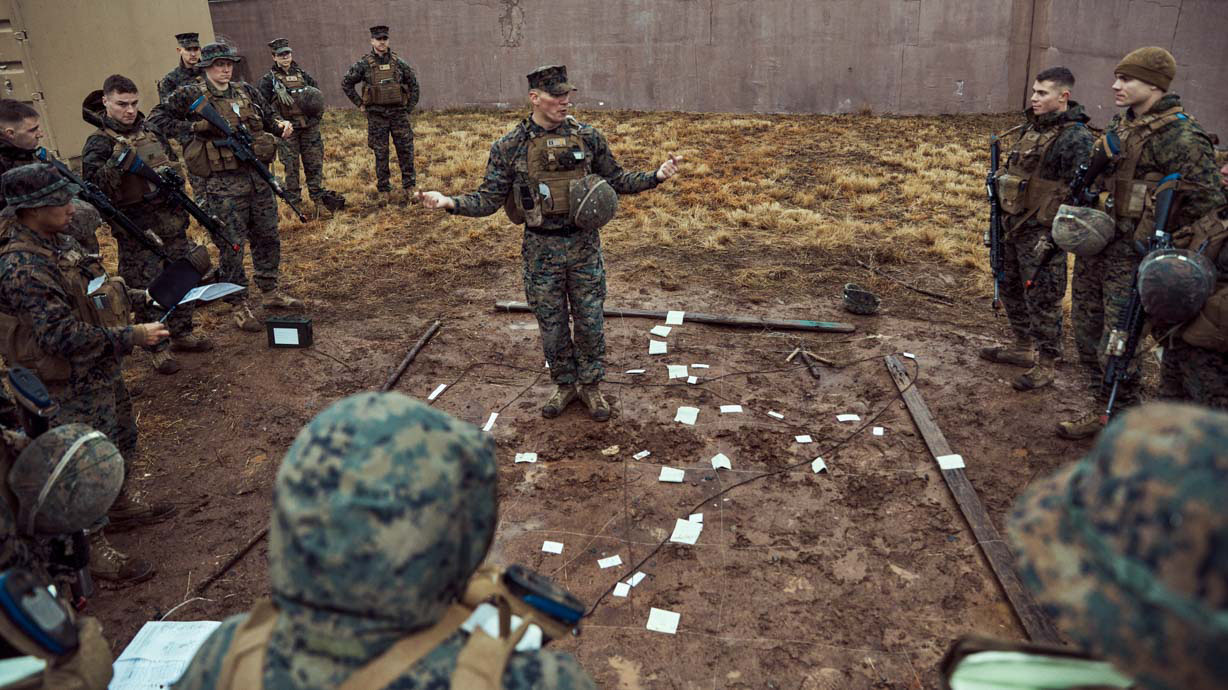
Because infantry officers must be prepared to lead their troops anywhere in the world that the infantry is needed, they work and train in all climates and weather conditions. During training exercises, as in real combat situations, infantry officers work, eat, and sleep outdoors and in tents. When not in the field, infantry officers perform administrative and management duties in offices.
How much do they make?
Median Military Salary
This is the median, or the midpoint, of the salary range for this career.
Note that the median salary does not include bonuses, special pays, health or dental benefits — which are a standard part of military compensation.
This is the median, or the midpoint, of the salary range for this career.
Note that the median salary does not include bonuses, special pays, health or dental benefits — which are a standard part of military compensation.
$91,658
Military Salary Range
This is the range based on years of service, degree level, special pays, family status and location.
Note that the median salary does not include bonuses, special pays, health or dental benefits — which are a standard part of military compensation.
This is the range based on years of service, degree level, special pays, family status and location.
Note that the median salary does not include bonuses, special pays, health or dental benefits — which are a standard part of military compensation.
$24,713 - $300,305
How Military Pay is More Than Just a Salary
Base pay is the standard income you'll earn as a service member, providing a stable foundation to start achieving your financial goals.
- Set based on rank and years of service.
- Paid every month.
Allowances are additional payments to help cover living expenses like housing and food.
- Tax-free payments.
- Varies by location and family status.
Special pay provides extra compensation for unique skills, hazardous duties, or challenging assignments.
- Based on specialized roles.
- Varies by position and duty.
Strength Begins Here: Inside Infantry Training
Get a closer look at how Soldiers forge resilience, unity and confidence from day one.
Transcription
DOUGHERTY: As infantry soldiers you have the ability and the training to fight in the heat of the desert the Arctic tundra the mountains and the valleys and the jungles. It is the infantry who is called to fight.
FORGING OF AN INFANTRYMAN
BATES: Once they get off the bus, here at Fort Moore, is getting that initial gut check reaction. That first day that they come on the sand hill on Fort Moore they get introduced into what is called the 1st 100 yards. There are team-based events where we'll all run through together as a team and show that teamwork is what continues to drive the army.
RONE: So, starting off when we got off the bus, we were highly motivated individuals and we ran 100 yards. After that we were introduced to all the category and everything and then we were brought to a whole bunch of events where we did it with our platoon. So starting off we had we had a relay race with the first aid mannequin where the first team to finish that as well won that. And then following that we had a Total War and then lastly, we're introduced to the 1st 100 in the history about that.
JOHNSON: I mean the first 100 cup of World War One where empty soldier came out the trench and they worked together coming to the army can be kind of scary but knowing that you coming to our team meeting I'm part of you you're part of me you bring something to the table I bring something to the table and we go to the 1st 100 pretty much event that we go to together
ONE STATION UNIT TRAINING
BATES: OSUT is 1 station unit training so generally for other MLM's that will go through what is called basic combat training and follow on to a different duty station or a different unit where they will continue advanced individual training. However here we are a special MOS where we have them from the day, they begin their army career, until the end of their advanced individual training which consists of 22 weeks.
LOWRY: HI I'm private Jenna Lowry I just experienced the gas chamber. We learned the command of when there's going to be gas: “gas, gas, gas” three times and then we hold our breath and close your eyes for 9 seconds and seal our gas mask it just tests your limits if you don't think you can do it but then when you once you set your mind to it it's like a great accomplishment.
GRANT: And you get into you know the drill sergeants go from drill sergeants to mentors they start teaching you a lot more they teach you how to become an infantry so they teach you everything that you need to know before you get to the line so when you get to the line you're squared away and your team leaders and squad leaders they see that OK we have a great product that this is our best trained soldier when it comes to us going to war you have a great product.
HONOR HILL
BATES: When they do pass through the gates and on the hill, they'll be greeted by a bonfire get them into that mindset that this is it they finally passed all required tasks and they're becoming infantrymen.
DOUGHERTY: I just want to personally say congratulations these last 20 weeks for the majority of you have probably been the most physically and mentally demanding weeks that you've had in your lives. Now the cross rifles that you've received are not just a simple piece of plastic. Those cross rifles represent much more. As infantry soldiers you have the ability and the training to be airborne infantry Light Infantry striker and fight on a Bradley vehicle. It is the infantry who is called to fight. I just want to say again congratulations from me and the cadre 2 more weeks left we just need to push through and finish strong and we'll get to graduation.
Strength Begins Here: Inside Infantry Training
What training do Infantry Officers gain in the Military?
Officers typically enter the Military after they have completed a four-year college degree; enlisted service members can transition to officer positions through a variety of pathways and earn a degree while serving. Job training for infantry officers primarily consists of classroom instruction and on-the-job learning in various training environments. Like other officers, they complete a comprehensive training program covering responsibilities, military structure and etiquette, traditions, and leadership development. Job-specific training content may include:
- Infantry leadership roles
- Infantry squad and platoon tactics
- Modern offensive and defensive combat techniques
Military Training for Enlisted Service members
All enlisted service members complete basic military training, which includes time spent in a classroom and in the field, and covers tactical and survival skills, physical training, military life and customs, and weapons training.

What skills help Infantry Officers succeed?
- Ability to motivate and lead others
- Interest in land battle history and strategy
- Willingness to accept a challenge and face danger
What are possible career paths after the Military?
- Instructional Coordinators