









Explore Careers
Chaplains




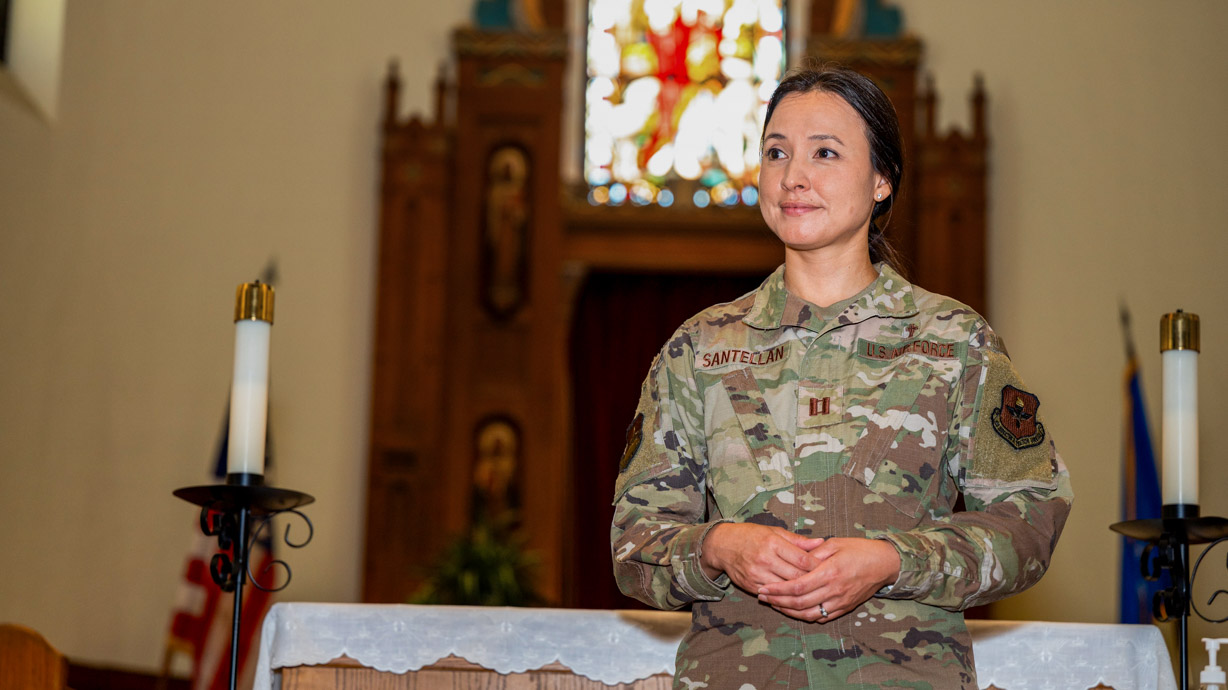
What do Chaplains do in the Military?
Where do Chaplains work?
Chaplains in the military usually work in offices, hospitals, and places of worship. Those assigned to sea duty work aboard ships. Those assigned to land combat units sometimes work outdoors.
How much do they make?
Median Military Salary
This is the median, or the midpoint, of the salary range for this career.
Note that the median salary does not include bonuses, special pays, health or dental benefits — which are a standard part of military compensation.
This is the median, or the midpoint, of the salary range for this career.
Note that the median salary does not include bonuses, special pays, health or dental benefits — which are a standard part of military compensation.
$123,824
Military Salary Range
This is the range based on years of service, degree level, special pays, family status and location.
Note that the median salary does not include bonuses, special pays, health or dental benefits — which are a standard part of military compensation.
This is the range based on years of service, degree level, special pays, family status and location.
Note that the median salary does not include bonuses, special pays, health or dental benefits — which are a standard part of military compensation.
$26,415 - $356,274
How Military Pay is More Than Just a Salary
Base pay is the standard income you'll earn as a service member, providing a stable foundation to start achieving your financial goals.
- Set based on rank and years of service.
- Paid every month.
Allowances are additional payments to help cover living expenses like housing and food.
- Tax-free payments.
- Varies by location and family status.
Special pay provides extra compensation for unique skills, hazardous duties, or challenging assignments.
- Based on specialized roles.
- Varies by position and duty.
Transcription
Military service means being there to serve the men and women in uniform, according to their First Amendment rights. So ensuring that religious freedom and that religious practice are encouraged and supported.
If they are Buddhist, or Hindu, or Islamic, or whatever their faith tradition is, we want to be able to help them connect with their religious choice, or their spiritual practice, whatever that may be.
The kind of relationship we have, the trust that we’re able to build within the ranks, and the confidentiality that we have has given me the chance to touch on some very deep and meaningful experiences.
We nurture the living, we care for the wounded, we honor the fallen. The greatest opportunity we are allowed as chaplains is to be able to lay to rest those who’ve served our nation, to be there when that soldier finishes the race. They’ve given all. They’ve given the full sacrifice. I am grateful to all the men and women who have committed themselves to either serve as a religious affairs specialist, a religious affairs NCO, or to serve as a chaplain in the United States Army. You are part of our legacy.
Army Chaplains
What training do Chaplains gain in the Military?
Officers typically enter the Military after they have completed a four-year college degree; enlisted service members can transition to officer positions through a variety of pathways and earn a degree while serving. Chaplains may have an education in religious studies. Job training for chaplains consists of classroom and on-the-job learning in various environments. Like other officers, they complete a comprehensive training program covering responsibilities, military structure and etiquette, traditions, and leadership development. Job-specific training content may include:
- Role and responsibility of military chaplains
- Administration and leadership techniques
- Training and education methods
- Procedures for planning programs
- Pastoral counseling methods
Military Training for Enlisted Service members
All enlisted service members complete basic military training, which includes time spent in a classroom and in the field, and covers tactical and survival skills, physical training, military life and customs, and weapons training.

What skills help Chaplains succeed?
- Ability to express ideas clearly and concisely
- Interest in planning and directing the work of others
- Sensitivity to the needs of others